
HVAC Technician – Level 4
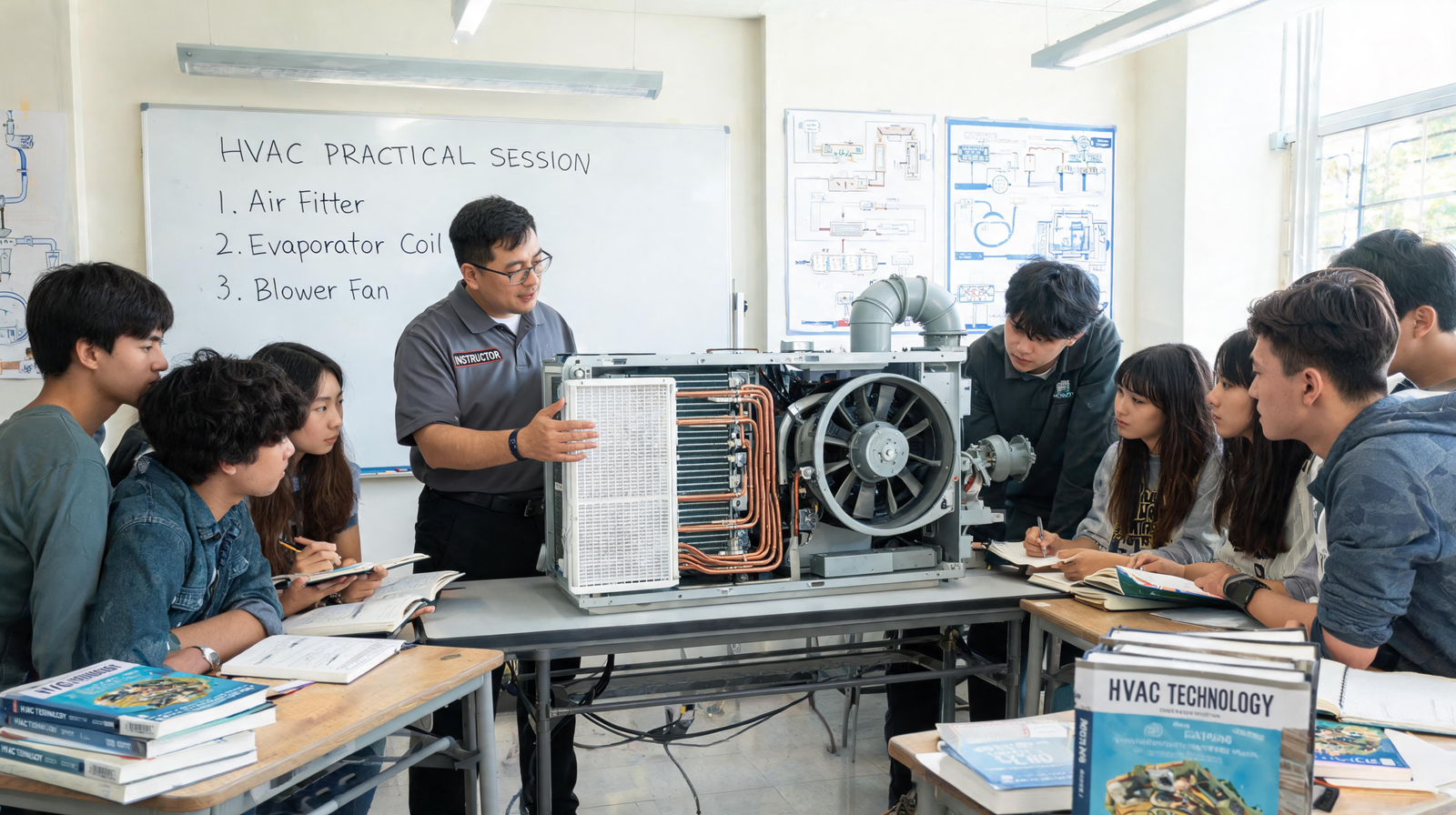
The HVAC Technician – Level 4 course at Learnovate Training Centre provides practical training in heating, ventilation, and air conditioning systems. It helps learners develop the technical skills needed to install, maintain, and troubleshoot HVAC equipment safely and professionally.
Throughout this 3-month programme, learners complete 12 structured sessions combining theory and practical technical training. They study HVAC safety, electrical fundamentals, refrigeration principles, air conditioning systems, ventilation, ductwork, installation methods, preventive maintenance, and fault diagnosis. As a result, participants gain the confidence to work with HVAC systems in residential, commercial, and industrial environments.
Course Information
- Duration: 3 Months
- Sessions: 12 Sessions
- Training Type: Theory and Practical Technical Training
- Study Mode: Classroom / Blended Training
Curriculum
- 12 Sections
- 48 Lessons
- 12 Weeks
- Introduction to HVAC SystemsUnderstand the purpose, scope, components, and applications of heating, ventilation, and air conditioning systems in residential, commercial, and industrial buildings.4
- HVAC Safety, Tools and Work PracticesLearn essential safety procedures, personal protective equipment, hand tools, power tools, measurement tools, and safe work practices used in HVAC installation and maintenance.4
- Basic Electrical Principles for HVACDevelop foundation knowledge of electrical circuits, controls, wiring, motors, relays, contactors, overloads, and safe troubleshooting for HVAC equipment.4
- Refrigeration Cycle FundamentalsStudy the refrigeration cycle, refrigerant flow, heat transfer, pressure-temperature relationship, and the function of major refrigeration components.4
- Air Conditioning Systems and ComponentsUnderstand split units, packaged units, ducted systems, evaporator coils, condensers, compressors, fans, filters, drain systems, and key operating principles.4
- Heating Systems and Heat PumpsLearn the basic operation of heating systems and heat pumps, including heating modes, reversing valves, auxiliary heating, and common service requirements.4
- Ventilation, Airflow and Indoor Air QualityGain practical knowledge of ventilation principles, airflow measurement, air distribution, filters, fresh air requirements, and indoor air quality improvement methods.4
- Ductwork, Piping and Insulation BasicsLearn duct sizing basics, duct installation, flexible and rigid ducts, copper piping, insulation, supports, leakage prevention, and good installation practices.4
- Installation Procedures and CommissioningUnderstand standard HVAC installation procedures, mounting, piping, wiring, vacuuming, refrigerant charging basics, testing, and commissioning checks before handover.4
- Preventive Maintenance of HVAC SystemsLearn routine maintenance procedures including cleaning filters, coils, drains, fans, checking electrical parts, performance checks, and maintenance documentation.4
- Troubleshooting and Fault DiagnosisDevelop systematic troubleshooting skills for common HVAC problems such as poor cooling, water leakage, abnormal noise, electrical faults, airflow issues, and refrigerant-related problems.4
- Practical HVAC Assessment and Final ProjectComplete practical assessments covering safety, tools, component identification, maintenance steps, troubleshooting scenarios, and final technician-level evaluation.4

Interested in this course?
Chat with our AI advisor — we'll answer your questions, check availability, and get you enrolled.
Our team typically responds within minutes.