
SAP Training – Level 4
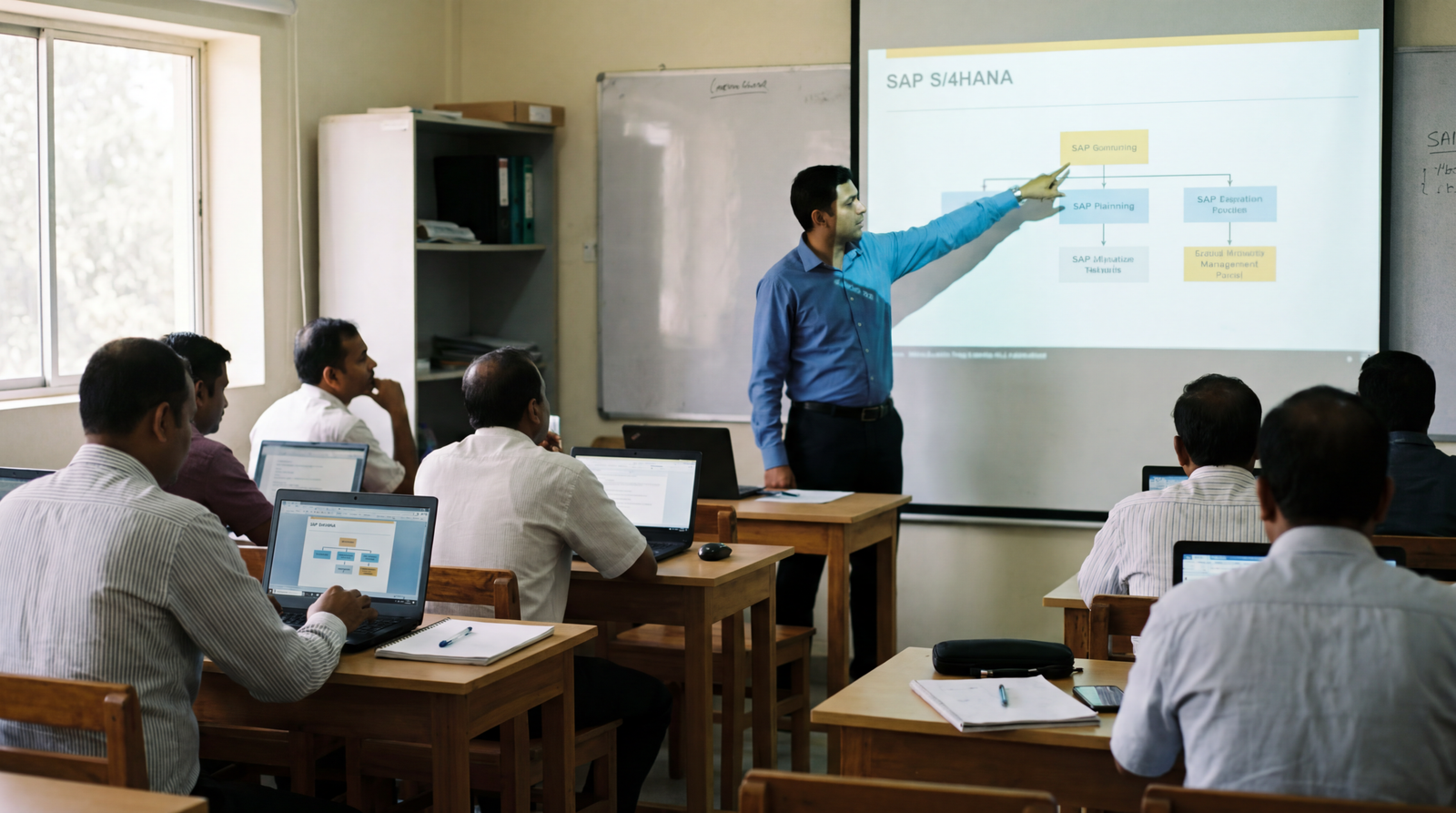
The SAP Training – Level 4 course at Learnovate Training Centre provides practical knowledge of SAP ERP and business process management. It helps learners understand how organisations use SAP to manage daily business operations efficiently.
Throughout this 3-month programme, learners complete 12 structured sessions with theory and practical system-based training. They study SAP navigation, organisational structure, master data, procurement, inventory, sales, finance, human resources, reporting, and system controls. As a result, participants gain the confidence to perform basic SAP transactions and support SAP-enabled business operations.
Course Information
- Duration: 3 Months
- Sessions: 12 Sessions
- Training Type: Theory and Practical System-Based Training
- Study Mode: Classroom / Blended
Curriculum
- 12 Sections
- 48 Lessons
- 12 Weeks
- Introduction to SAP and ERP SystemsUnderstand SAP, ERP concepts, business processes, system navigation, and the role of SAP in modern organizations.4
- SAP Logon, User Interface and NavigationLearn how to access SAP, use SAP Easy Access, work with menus, transactions, favorites, and basic user settings.4
- Organizational Structure in SAPStudy the core organizational elements used in SAP such as company code, plant, storage location, sales organization, and purchasing organization.4
- Master Data ManagementLearn the importance of master data and how customer, vendor, material, and employee data support daily SAP transactions.4
- SAP Materials Management BasicsUnderstand procurement, purchase requisitions, purchase orders, goods receipt, invoice verification, and inventory updates.4
- SAP Inventory and Warehouse ProcessesLearn stock management, stock transfers, goods issue, physical inventory, and warehouse-related SAP transactions.4
- SAP Sales and Distribution BasicsStudy sales order processing, delivery, billing, customer management, and sales document flow in SAP.4
- SAP Finance and Accounting BasicsUnderstand financial accounting concepts, general ledger, accounts payable, accounts receivable, postings, and basic financial reports.4
- SAP Human Capital Management BasicsLearn basic HR processes in SAP including employee records, personnel administration, attendance, payroll support, and HR reporting.4
- SAP Reports and Data ExtractionLearn how to run SAP standard reports, apply filters, export data, and interpret basic business information.4
- SAP Controls, Authorizations and Best PracticesUnderstand user roles, authorizations, document accuracy, audit trail, compliance, and professional SAP work practices.4
- Practical SAP Case Study and Final AssessmentApply SAP knowledge through guided scenarios covering procurement, inventory, sales, finance, reporting, and final assessment.4

Interested in this course?
Chat with our AI advisor — we'll answer your questions, check availability, and get you enrolled.
Our team typically responds within minutes.