
ISO 22000:2018 Food Safety Management Systems
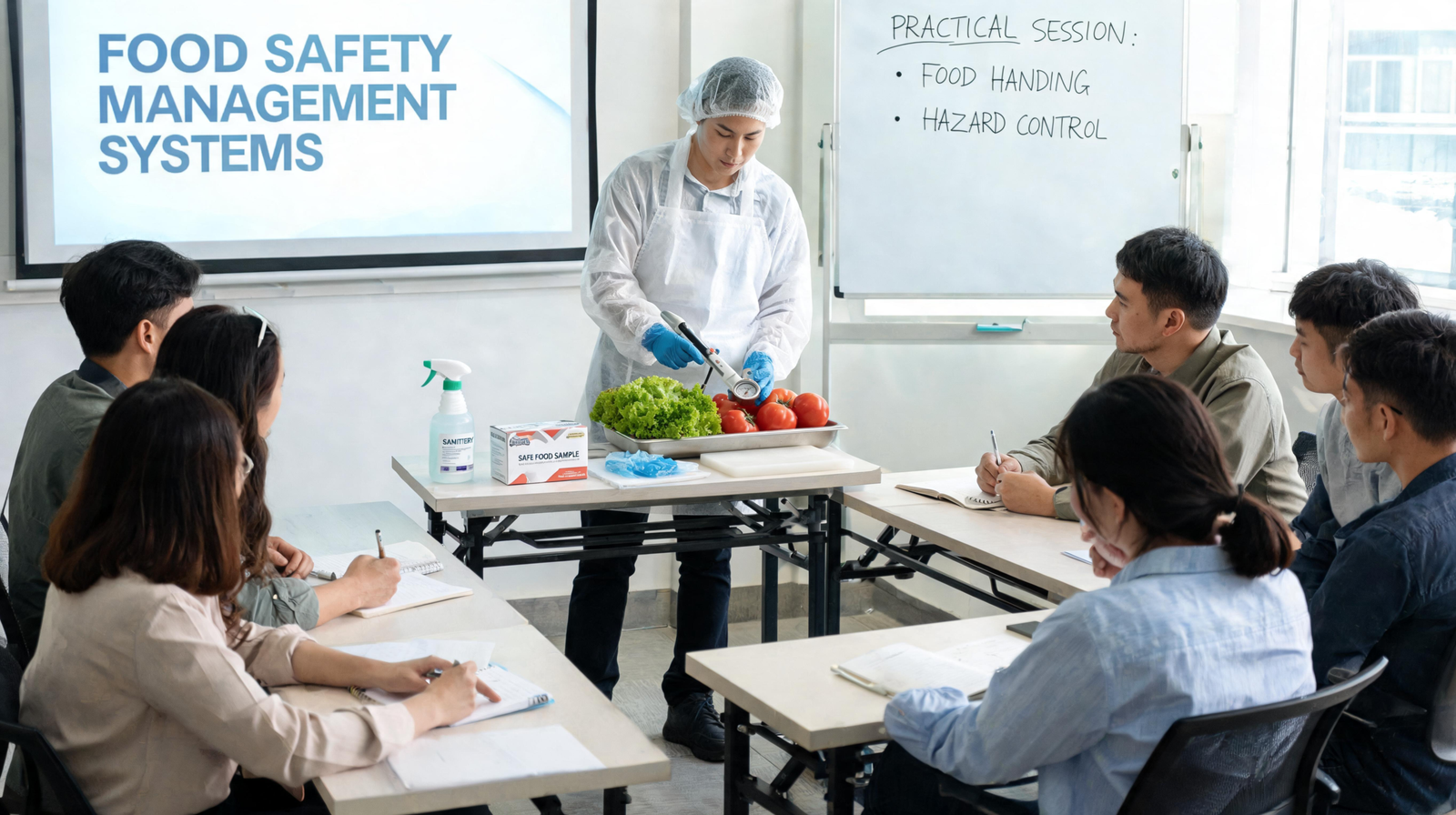
The ISO 22000:2018 Food Safety Management Systems course at Learnovate Training Centre provides practical knowledge of Food Safety Management Systems (FSMS). It helps learners understand how organisations establish, implement, maintain, and continually improve food safety practices.
Throughout this 2-month programme, learners complete 8 sessions covering 12 structured modules. They study food safety hazards, prerequisite programmes, HACCP principles, traceability, emergency preparedness, recall management, internal auditing, corrective actions, and continual improvement. As a result, participants develop the skills required to support ISO 22000 implementation and maintain effective food safety systems.
Course Information
- Duration: 2 Months
- Sessions: 8 Sessions
- Modules: 12 Modules
- Training Mode: Classroom / Blended Training
Curriculum
- 12 Sections
- 36 Lessons
- 2 Weeks
- Introduction to ISO 22000:2018 and Food Safety ManagementUnderstand ISO 22000:2018 purpose, food safety management principles, key terms, and benefits for food organizations.3
- Context of the Organization and FSMS ScopeLearn how to determine internal and external issues, interested parties, legal expectations, and the scope of the Food Safety Management System.3
- Leadership, Food Safety Policy and ResponsibilitiesStudy leadership commitment, food safety policy, roles, responsibilities, authority, accountability, and communication responsibilities.3
- Food Safety Hazards and Risk-Based ThinkingIdentify biological, chemical, physical, and allergen hazards and understand risk-based planning in food safety operations.3
- Prerequisite Programmes and Operational Hygiene ControlsLearn prerequisite programmes, hygiene controls, pest control, sanitation, maintenance, personal hygiene, and facility requirements.3
- Hazard Analysis and Critical Control PointsUnderstand HACCP principles, hazard analysis, control measures, CCP identification, critical limits, and monitoring systems.3
- Planning, Objectives and Change ManagementDevelop FSMS objectives, action plans, resource planning, change controls, and food safety improvement planning.3
- Support, Competence, Awareness and CommunicationCover resources, competence, food safety awareness, internal communication, external communication, and emergency communication.3
- Documented Information and Food Safety RecordsLearn how to create, control, update, retain, and protect FSMS documents, procedures, forms, and operational records.3
- Traceability, Emergency Preparedness and Recall ManagementStudy product traceability, withdrawal, recall procedures, emergency preparedness, incident response, and crisis handling.3
- Performance Evaluation, Internal Audit and Management ReviewLearn monitoring, measurement, verification, validation, internal audit, management review, and FSMS performance evaluation.3
- Nonconformity, Corrective Action and Final FSMS ProjectApply learning through nonconformity handling, root cause analysis, corrective actions, continual improvement, and final practical assessment.3

Interested in this course?
Chat with our AI advisor — we'll answer your questions, check availability, and get you enrolled.
Our team typically responds within minutes.